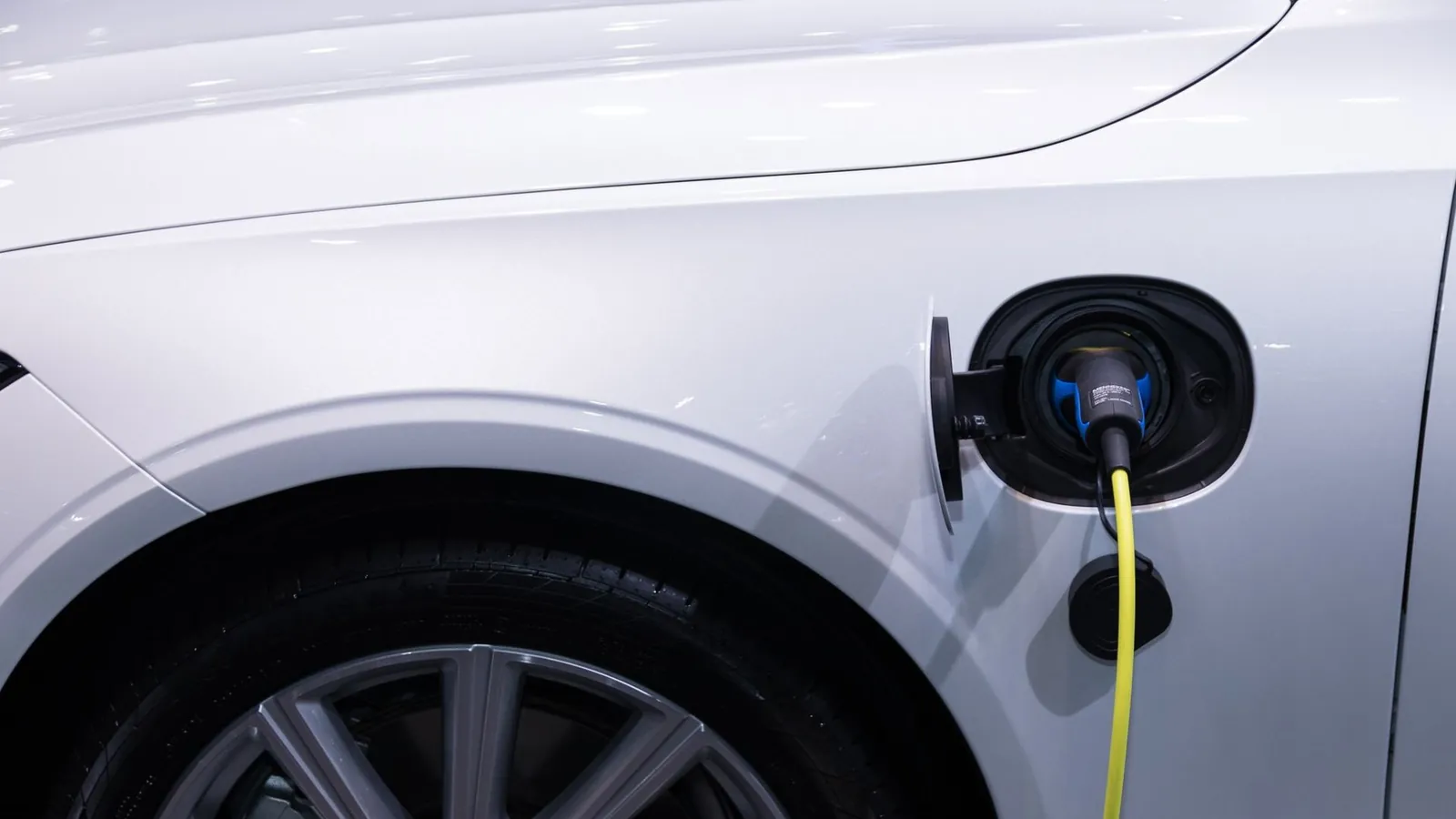
EV charging at rest areas on the Interstate is rare, and federal law is the main reason. As of November 2026, 23 U.S.C. 111 still bars commercial businesses that serve motorists from Interstate rights-of-way, and it has no exception for selling electricity. FHWA guidance says charging stations may not be set up where that ban applies unless use is free of charge. Toll road service plazas and rest areas off the Interstate are different cases, and that is where most of the charging we have documented sits.
In our directory, 31 of 1,366 locations document EV charging. That does not mean the other 1,335 have none: for most stops, no official source says either way, so we record “unknown”.
Why Interstate rest areas rarely sell EV charging
Federal law treats a paid charger like a gas station. 23 U.S.C. 111(a) requires states to keep service stations and other commercial establishments for motor vehicle users off Interstate rights-of-way. Section 111(b) allows limited commercial activities inside Interstate rest areas: tourism media, event tickets, travel information and lottery machines. Section 111(c) allows vending machines. Electric vehicle charging is not on either list.
FHWA has answered the EV question directly. In its MAP-21 questions and answers, FHWA says charging stations may not be established where 23 U.S.C. 111 prohibits commercial establishments, “unless use is free of charge”. For fringe and corridor parking facilities within Interstate rights-of-way, it says no fees may be charged. That leaves a state two choices at an ordinary Interstate rest area: offer charging for free or not offer it.
Has Congress changed the rule?
Not as of November 2026. Bills to allow charging at Interstate rest areas have been introduced, but none we found has become law:
- RECHARGE Act (S. 2653, 119th Congress). Introduced August 1, 2025, it would add a subsection to 23 U.S.C. 111 requiring the Secretary to permit EV charging infrastructure at Interstate rest areas (bill text). Its last recorded action is referral to the Senate Environment and Public Works Committee on August 1, 2025 (GovInfo bill status).
- Surface transportation extension. The Continuing Appropriations and Extensions Act, 2027 (Public Law 119-103, signed September 2, 2026) extends federal surface transportation programs through December 11, 2026. Its enrolled text contains no change to rest area rules or EV charging.
Federal surface transportation law is due for reauthorization, so this can change. Check the current version of 23 U.S.C. 111 before relying on this section after December 2026.
How the NEVI program fits in
The National Electric Vehicle Infrastructure (NEVI) Formula Program funds public fast chargers along designated Alternative Fuel Corridors. NEVI does not change the commercial ban in 23 U.S.C. 111, so NEVI money does not make a paid charger legal inside an ordinary Interstate rest area. Massachusetts, for example, tells residents that many NEVI stations will be located near rest areas, service plazas, or retail locations.
For drivers, NEVI’s main effect is a minimum standard for funded stations. FHWA’s final rule, 23 CFR Part 680 (published February 28, 2023, effective March 30, 2023), requires:
- at least four ports at a corridor station, each delivering up to 150 kW at the same time;
- a CCS Type 1 connector on each DC fast charging port, or another connector that can charge a CCS vehicle;
- average annual uptime above 97% per port;
- contactless credit and debit card payment, with no membership required.
The program’s guidance has changed since then. On August 11, 2025, FHWA issued revised interim final guidance. It took effect immediately, shortened state plans and let states set station spacing along corridors. State NEVI plans and funding have shifted since, so check your state DOT’s NEVI page for current projects. A NEVI-funded charger near the highway does not tell you whether the next rest area has one.
Which rest areas and service plazas document EV charging
These 31 listings in our directory have a source that says EV charging is present. Charger type, number of ports, price and whether a charger is working are not part of our data, so check before you count on one.
Ten of the 31 are on California routes. At least eight are toll road service areas or service plazas, where fuel and food are sold: four New Jersey Turnpike service areas (Vince Lombardi, Molly Pitcher, Richard Stockton and Woodrow Wilson), King of Prussia on the Pennsylvania Turnpike, Fort Drum on Florida’s Turnpike, Morton Travel Plaza in West Virginia and Darien Service Plaza in Connecticut. Four more sit on US or state routes that are not Interstates (US-101, US-15, US-29 and MN-61), where the Interstate commercial ban does not apply.
Toll road plazas: the best bet for a charge on the highway
Toll road service plazas sell fuel and food, and several operators list chargers. These figures come from the operators’ own pages:
- New York State Thruway: more than 100 charging stations across its 27 service areas (Thruway Authority). The Governor’s office said in November 2025 that at least four Level 3 fast chargers are planned for every service area.
- Maryland I-95: four Level 3 DC fast chargers plus one ADA-accessible charger at each of Maryland House and Chesapeake House, with additional proprietary-network chargers at both.
- Indiana Toll Road: charging at all four travel plaza locations, including a 50 kW CCS charger at Rolling Prairie (Indiana Toll Road).
- Florida’s Turnpike: charging at its service plazas, at fees that vary with energy rates (Florida’s Turnpike).
- Pennsylvania Turnpike: charging at select plazas (PA Turnpike).
Our turnpike service plaza guide covers each toll road’s plazas and parking rules.
How to plan EV charging on a road trip
Plan your charging stops off the Interstate first. EV charging at rest areas is too sparse to build a route on, so treat a rest area charger as a bonus. These steps follow from the rules above.
- Build the route around fast chargers near interchanges. The Department of Energy’s Alternative Fuels Data Center station locator lists public charging stations, with filters and a route option. It is a government tool, not a charging network.
- On toll roads, check the operator’s plaza page. Plaza chargers are listed by the toll authority, and some plazas serve only one direction.
- Use rest areas for the stops chargers do not cover. Restrooms, pet areas and picnic tables are where rest areas help an EV driver most. The rest area finder shows documented amenities for each stop.
- Check the next gap before you skip a charge. In our directory, the median gap between rest areas measured by mile markers is 44 miles, and 13% of gaps are 90 miles or longer. Our guide on how far apart rest areas are lists the longest stretches.
- Check for closures. A closed rest area or plaza takes its chargers with it. See rest area closures for each state’s 511 service.
- Watch time limits if you charge slowly. State rest area limits range from 2 hours in Pennsylvania and Tennessee to 24 hours in Texas, Kansas and Wisconsin. See can you sleep at a rest area for each state’s rule.
Frequently asked questions about EV charging at rest areas
Is EV charging at a public rest area free?
It can be, and at an Interstate rest area outside a toll road FHWA’s guidance points that way: charging may be established there only if use is free of charge. Our directory does not record prices, so we cannot confirm which sites charge nothing. Toll road plazas are allowed to charge fees; Florida’s Turnpike says its fees vary with energy rates.
Can I charge overnight at a rest area?
Only within the state’s time limit and posted signs. Charging does not extend a parking limit. A rest area with an 8-hour or 2-hour limit is not a place for a full overnight charge on a slow charger.
Why does your directory show “unknown” for EV charging at most stops?
Most official rest area lists do not say whether a stop has chargers. We mark a stop as having EV charging only when a source says so, and otherwise leave it unknown rather than recording “no”. If you know of a charger we have missed, you can contact us.
Sources
- 23 U.S.C. 111, Agreements relating to use of and access to rights-of-way—Interstate System — U.S. Code (Legal Information Institute)
- Miscellaneous Operations & Freight Provisions Questions & Answers (MAP-21) — Federal Highway Administration
- S. 2653, RECHARGE Act, introduced text — U.S. Congress
- National Electric Vehicle Infrastructure Standards and Requirements; Final Rule (88 FR 12724) — Federal Highway Administration, Federal Register
- Alternative Fueling Station Locator — U.S. Department of Energy, Alternative Fuels Data Center